


Human plasma is a widely used biospecimen in biomedical, pharmaceutical, diagnostic, and translational research. As the liquid component of blood, plasma contains a complex mixture of proteins, metabolites, lipids, hormones, cytokines, antibodies, nucleic acids, and other circulating molecules that can provide valuable information about physiological and disease-associated processes.
Cell Bio provides human plasma samples for research and supports custom plasma procurement projects for academic institutions, biotechnology companies, pharmaceutical organizations, diagnostic developers, and other research teams. Human plasma samples can be sourced according to study-specific requirements, including donor characteristics, disease indication, anticoagulant type, processing conditions, sample volume, and associated clinical data.
Our human biospecimen sourcing capabilities support studies ranging from biomarker discovery and assay development to plasma proteomics, metabolomics, drug discovery, translational research, and preclinical research.
For projects requiring specific donor populations or collection protocols, Cell Bio can support custom and prospective human plasma collection based on defined inclusion and exclusion criteria.
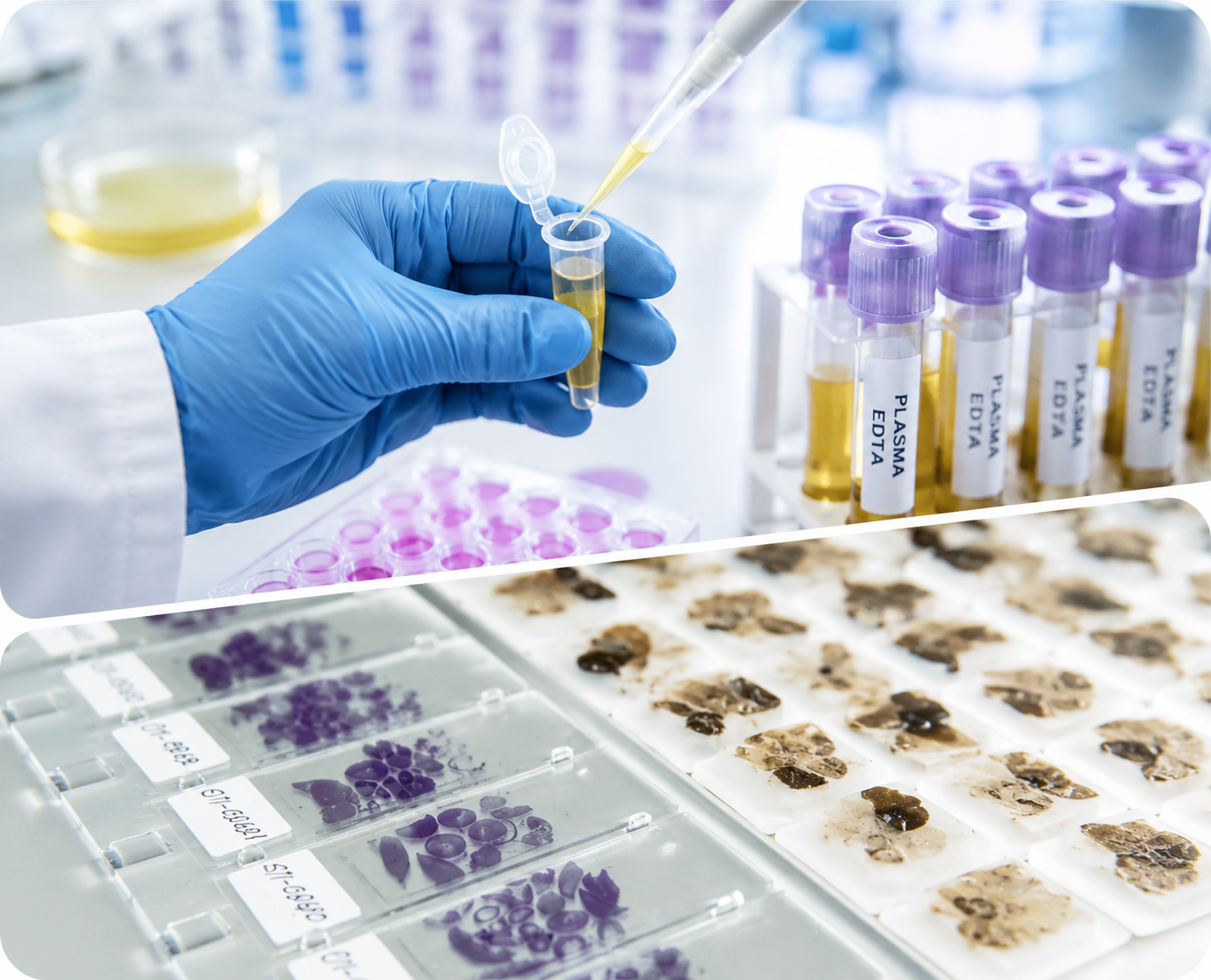
Plasma and Serum Biospecimens
Human Plasma for Research
Human plasma is an important biological matrix for studying circulating biomarkers and systemic biological processes. Because plasma contains molecules originating from multiple tissues and physiological pathways, human plasma for research is extensively used in studies investigating disease mechanisms, treatment response, immune activity, metabolic changes, and potential diagnostic or prognostic biomarkers.
Research plasma samples can support a wide range of analytical platforms and experimental workflows, including protein analysis, immunoassays, mass spectrometry, metabolomics, cytokine profiling, molecular assays, and biomarker validation studies.
Cell Bio supports researchers requiring human plasma samples from healthy donors, patients with specific diseases, and clinically characterized donor populations.
Depending on project requirements and availability, plasma samples may be provided with relevant donor and clinical information. Custom procurement programs can also be developed when specific cohorts, collection conditions, anticoagulants, or processing protocols are required.
As a human plasma supplier, Cell Bio focuses on controlled biospecimen collection, traceability, standardized processing, and project-specific sourcing to help researchers obtain plasma samples appropriate for their downstream applications.
Available Human Plasma Samples
Research projects can require significantly different types of plasma depending on the study objective, analytical method, disease indication, and biomarker being investigated.
Cell Bio can support the sourcing of human plasma specimens according to defined research requirements. Projects may involve healthy donor plasma, disease-specific plasma, patient-derived plasma, clinical plasma samples, fresh or frozen specimens, and plasma collected using different anticoagulants.
Where required, prospective collection programs can be designed around project-specific donor criteria and sample-processing requirements.
Healthy Donor Plasma
Healthy donor plasma is commonly used as a reference or control material in biomedical research, assay development, biomarker studies, and comparative disease research.
Healthy human plasma samples can support studies requiring baseline measurements of circulating proteins, metabolites, cytokines, antibodies, or other analytes.
Depending on study design, healthy donor plasma may be selected according to demographic or other predefined donor characteristics.
Potential applications include:
- assay development and validation;
- biomarker reference studies;
- proteomic and metabolomic research;
- immunological studies;
- analytical method development;
- comparison with disease-specific cohorts;
- pharmaceutical and translational research.
For studies comparing affected and unaffected populations, control plasma samples can be sourced according to defined eligibility criteria.
Disease-Specific Plasma Samples
Patient-derived plasma provides researchers with access to circulating biological signals associated with specific diseases and clinical conditions.
Cell Bio supports projects requiring disease-specific plasma samples for biomedical and pharmaceutical research. Depending on the project, donors can be selected according to diagnosis, disease characteristics, treatment status, demographic criteria, or other relevant parameters.
Disease plasma samples can be particularly valuable for biomarker discovery, patient stratification, disease progression studies, therapeutic-response research, and translational drug development.
Where existing samples do not meet the required criteria, prospective collection can provide greater control over donor selection and pre-analytical conditions.
This approach allows researchers to define parameters such as:
- disease indication;
- inclusion and exclusion criteria;
- donor demographics;
- treatment status;
- collection time points;
- anticoagulant;
- required plasma volume;
- processing conditions;
- aliquot size;
- clinical data requirements.
Disease-specific human plasma procurement can therefore be adapted to the scientific objectives of individual research programs.
Patient-Derived & Clinical Plasma Samples
Patient-derived plasma samples provide a minimally processed biological matrix for investigating circulating markers associated with disease biology and therapeutic response.
Clinical plasma samples may be useful across oncology, immunology, inflammatory disease, metabolic research, infectious disease research, neurological studies, and other biomedical fields.
Depending on the collection project and available clinical documentation, samples may be associated with relevant donor and disease information.
This can help researchers build better-characterized cohorts and investigate relationships between molecular findings and clinical variables.
Cell Bio can support human clinical plasma samples for research through existing sourcing capabilities or custom prospective collection projects.
For studies requiring narrowly defined patient populations, the collection strategy can be aligned with protocol-specific eligibility criteria.
Fresh & Frozen Human Plasma
The required sample format depends on the research application, analytical workflow, transportation requirements, and study protocol.
Cell Bio can support projects requiring fresh human plasma or frozen human plasma samples, subject to project specifications and availability.
Fresh plasma may be appropriate for workflows requiring short intervals between collection and downstream processing. Frozen plasma offers practical advantages for sample storage, batch analysis, multi-site studies, and research programs requiring larger cohorts.
Pre-analytical variables can influence downstream analytical results. For this reason, collection and processing requirements should be defined as early as possible when designing a plasma-based research project.
Relevant parameters may include the anticoagulant used, time from blood collection to plasma separation, centrifugation conditions, aliquoting, freezing conditions, storage, and transportation.
Cell Bio works with researchers to define appropriate sample requirements before collection or procurement begins.
Matched Plasma, Serum & Blood Samples
Some studies require multiple biospecimen types from the same donor to enable cross-matrix comparisons.
Depending on project design and collection feasibility, Cell Bio can support projects requiring matched plasma samples, serum, whole blood, or other associated human biospecimens.
Matched serum and plasma samples can be particularly useful when researchers need to evaluate how sample matrix and processing conditions influence biomarker measurements.
Matched biospecimen strategies may also support:
- multi-omics research;
- biomarker validation;
- comparative assay development;
- immunological studies;
- pharmacodynamic research;
- longitudinal studies;
- translational research.
For prospective studies, the required biospecimen combination can be incorporated into the collection protocol before donor recruitment begins.
Human Plasma Samples by Anticoagulant
The anticoagulant used during blood collection is an important pre-analytical variable in plasma research. Different anticoagulants can influence specific analytes and analytical workflows, so the appropriate plasma type should be selected according to the downstream assay and study objectives.
Cell Bio can support research projects requiring plasma collected with commonly used anticoagulants, including EDTA plasma, heparin plasma, and citrate plasma.
When planning a custom plasma collection, researchers can specify the required collection tube, anticoagulant, processing protocol, sample volume, and aliquoting requirements.
EDTA Plasma
Human EDTA plasma is widely used across biomedical research and is compatible with many biomarker, molecular, proteomic, and analytical workflows.
Blood collected into EDTA-containing tubes is processed to separate plasma from cellular components. Depending on the study protocol, projects may require K2 EDTA plasma or K3 EDTA plasma.
Cell Bio can support the sourcing or prospective collection of EDTA plasma samples according to project-specific requirements.
Potential applications include biomarker research, protein analysis, molecular studies, pharmacodynamic research, and translational studies.
Because anticoagulant choice can affect specific downstream measurements, researchers should select EDTA plasma based on the requirements of their analytical platform and target analytes.
Heparin Plasma
Human heparin plasma is another commonly used plasma matrix in biomedical and clinical research.
Depending on the protocol, researchers may require lithium heparin plasma or sodium heparin plasma.
Heparin plasma samples may be used in biochemical, pharmacological, cellular, and other analytical research workflows. However, compatibility with a particular downstream assay should be evaluated during study design.
For prospective collection projects, Cell Bio can incorporate the required heparin type and processing specifications into the collection protocol.
Citrate Plasma
Human citrate plasma is collected using citrate as an anticoagulant and is particularly relevant to research involving coagulation pathways, hemostasis, and selected plasma proteins.
Projects may require citrated plasma samples or plasma collected using sodium citrate according to a defined protocol.
As with EDTA and heparin plasma, collection and processing conditions can influence downstream analytical results. Study-specific requirements should therefore define the anticoagulant, tube type, processing interval, centrifugation conditions, and storage parameters where these factors are critical to the research objective.
Human Plasma Collection & Procurement
Reliable plasma research begins with well-defined biospecimen requirements.
Cell Bio provides human plasma procurement and plasma sourcing services designed to support research projects with specific scientific, clinical, and operational requirements.
Before sourcing begins, project parameters can be defined according to the intended downstream application.
These may include donor population, disease indication, healthy control requirements, age range, sex, treatment status, anticoagulant, plasma volume, processing protocol, storage conditions, and associated clinical information.
This project-specific approach is particularly useful when standard biobank samples do not provide the combination of characteristics required by the study.
Human plasma sourcing can support both individual research projects and larger programs requiring multiple donor cohorts or repeated collections.
Custom Human Plasma Collection
For studies with specific requirements, Cell Bio can support custom human plasma collection according to a predefined research protocol.
Custom collection allows the research team to establish important variables before recruitment and sample collection begin.
A project may specify:
- donor inclusion and exclusion criteria;
- healthy or disease-specific cohorts;
- anticoagulant type;
- collection volume;
- sample processing requirements;
- aliquot configuration;
- freezing and storage requirements;
- associated clinical data;
- matched biospecimens;
- collection time points.
This approach can reduce variability between samples and provide researchers with greater control over pre-analytical factors.
Custom plasma procurement can be especially valuable for biomarker validation, drug-development programs, translational studies, and research requiring uncommon patient populations.
Prospective Human Plasma Collection
Prospective collection provides an additional option when suitable samples are not available from existing inventories or when a study requires a highly specific donor cohort.
With prospective human plasma collection, donor recruitment and sample collection can be performed according to predefined study criteria.
This approach can support disease-specific recruitment, treatment-defined populations, matched cohorts, specific anticoagulants, longitudinal sampling, and customized clinical-data requirements.
Prospective collection may also be useful when researchers require consistent processing conditions across an entire study cohort.
By defining collection and processing requirements before samples are obtained, research teams can better control variables that may influence downstream biomarker and molecular analyses.
Human Plasma Processing & Quality Control
The quality of human plasma samples depends not only on donor characteristics but also on how blood is collected, processed, stored, and transported. Pre-analytical variables can influence protein concentrations, metabolite profiles, cytokine measurements, and other molecular characteristics of plasma.
For this reason, Cell Bio emphasizes standardized procedures throughout human plasma collection, processing, and procurement.
Depending on project requirements, relevant parameters can be defined before sample collection, including anticoagulant type, blood collection tube, time between collection and processing, centrifugation conditions, aliquot volume, freezing protocol, storage conditions, and shipment requirements.
Standardized processing is particularly important for studies involving multiple donors or cohorts, where differences in sample handling may introduce unwanted analytical variability.
For custom and prospective collection projects, processing requirements can be incorporated into the study-specific collection protocol to help maintain consistency across the sample set.
Quality-related documentation may include sample identifiers, collection and processing information, specimen type, anticoagulant, storage conditions, and available donor or clinical data.
Pre-Analytical Variables in Plasma Research
Pre-analytical conditions can be especially important in biomarker discovery, proteomics, metabolomics, and cytokine analysis.
Variables such as collection tube type, anticoagulant, processing interval, temperature, centrifugation, storage duration, and freeze-thaw history may affect downstream measurements.
For research programs requiring tightly controlled specimens, Cell Bio can support prospective plasma sample collection according to predefined handling requirements.
Establishing these parameters before collection helps researchers obtain more consistent human plasma samples and reduces variability associated with sample handling.
Clinical Data & Sample Characterization
Well-characterized human plasma specimens can provide greater value for studies investigating relationships between molecular measurements and donor or disease characteristics.
Depending on the study, collection protocol, and sample availability, associated information may include donor demographics, diagnosis, disease characteristics, treatment status, collection information, anticoagulant type, processing details, and other relevant clinical parameters.
For disease-specific plasma procurement, project criteria can be defined before donor recruitment begins.
This allows researchers to request samples according to variables relevant to their study, such as disease indication, age range, sex, treatment status, or other protocol-defined characteristics.
Clinical annotation can be particularly useful for biomarker discovery and validation, translational research, patient stratification studies, and pharmaceutical research.
For projects requiring more extensive characterization, researchers can discuss specific data requirements with Cell Bio during project planning.
Human Plasma for Biomarker Research
Human plasma is one of the most widely studied biological matrices for circulating biomarker research. Its molecular composition reflects signals originating from multiple organs, tissues, immune populations, and physiological pathways.
As a result, human plasma biomarkers are investigated across a broad range of disease areas and research applications.
Cell Bio provides plasma samples for biomarker research and supports custom collection programs designed around specific donor cohorts and analytical requirements.
Human plasma may be used during multiple stages of biomarker development, from exploratory discovery to analytical validation and translational studies.
Applications may include the investigation of proteins, metabolites, cytokines, antibodies, circulating nucleic acids, and other molecular targets.
The ability to source both healthy control and disease-specific plasma samples can also support comparative research designed to identify molecular differences between study populations.
Plasma Biomarker Discovery
Plasma samples for biomarker discovery can support research into diagnostic, prognostic, predictive, and pharmacodynamic markers.
Discovery programs frequently require access to well-characterized donor cohorts and consistent sample-processing conditions. Variability in collection or processing can complicate the interpretation of molecular differences between study groups.
For this reason, prospective collection can be particularly valuable for biomarker projects requiring standardized pre-analytical conditions.
Researchers can define donor characteristics, disease criteria, anticoagulant, processing intervals, aliquot sizes, and storage requirements before sample collection begins.
Disease and control plasma samples may then be collected using aligned protocols to improve comparability across study cohorts.
Human plasma biomarker research can support applications in disease characterization, patient stratification, therapeutic development, treatment-response assessment, and diagnostic research.
Human Plasma Proteomics
Human plasma proteomics enables researchers to investigate circulating proteins and protein signatures associated with physiological conditions, disease processes, and therapeutic responses.
Plasma contains a highly complex protein mixture, making sample quality and pre-analytical consistency important considerations in proteomic research.
Human plasma samples may support discovery and targeted proteomic workflows, mass spectrometry-based research, protein profiling, and biomarker validation.
Applications of plasma protein analysis may include identifying disease-associated protein signatures, investigating biological pathways, evaluating treatment-related changes, and discovering potential biomarkers.
Cell Bio can support plasma proteomics projects requiring healthy donor plasma, disease-specific plasma, patient-derived samples, or prospectively collected cohorts.
Where specific collection conditions are required, project parameters can be established in advance to help ensure consistency across specimens.
Human Plasma Metabolomics
Human plasma metabolomics provides a way to investigate circulating metabolites and metabolic pathways associated with physiological state, disease, environmental factors, and therapeutic interventions.
Plasma metabolomic profiles can be used to investigate disease-associated metabolic changes and identify potential biomarkers or molecular signatures.
Human plasma samples may support untargeted and targeted metabolomic research, depending on the analytical platform and study design.
Because metabolite measurements can be influenced by pre-analytical factors, researchers may need to define specific requirements for sample collection, processing, storage, and freeze-thaw history.
Prospective human plasma collection can be useful when a metabolomics project requires standardized collection conditions across healthy and disease-specific cohorts.
Potential applications include metabolic biomarker discovery, disease-mechanism research, treatment-response studies, patient stratification, and translational research.
Plasma Cytokines & Immunological Research
Circulating cytokines and chemokines can provide valuable information about immune activation, inflammation, and disease-associated immune responses.
Plasma cytokine analysis is therefore used across immunology, inflammatory disease research, oncology, infectious disease studies, and other areas of biomedical research.
Human plasma samples may support multiplex cytokine assays, immunoassays, inflammatory biomarker research, immune profiling, and translational studies.
For cytokine-focused projects, careful control of collection and processing conditions can be particularly important.
Cell Bio can support researchers requiring healthy donor and disease-specific plasma samples for cytokine and immunological research, including custom collection projects with predefined sample-processing requirements.
Human Plasma Samples for Research Applications
Human plasma is used across biomedical research because it provides access to circulating molecular information while supporting a broad range of analytical platforms.
Cell Bio supplies human plasma samples for research and supports project-specific plasma procurement for biotechnology, pharmaceutical, diagnostic, and academic research programs.
Applications range from exploratory biomarker discovery to drug development and translational research.
Biomarker Discovery
Plasma is an important matrix for discovering and validating circulating biomarkers associated with disease biology, therapeutic response, and patient characteristics.
Plasma samples for biomarker research can support comparative studies between healthy controls and disease-specific cohorts.
Depending on the project, researchers may investigate proteins, metabolites, cytokines, antibodies, nucleic acids, or other circulating analytes.
Custom plasma collection allows donor characteristics and pre-analytical variables to be controlled according to the requirements of the biomarker program.
Drug Discovery
Plasma samples for drug discovery can support research throughout multiple stages of therapeutic development.
Potential applications include biomarker identification, target-related research, pharmacodynamic studies, assay development, patient stratification, and investigation of biological responses associated with therapeutic intervention.
Disease-specific patient plasma can provide access to circulating molecular signatures associated with clinically relevant populations.
Prospective collection may also support projects requiring donors with specific diagnoses, treatment histories, disease stages, or other characteristics.
Cell Bio works with research teams to define sample requirements according to the objectives of individual drug-discovery programs.
Translational Research
Plasma samples for translational research can help connect molecular discoveries with clinically characterized human populations.
Researchers can investigate relationships between circulating biomarkers and disease phenotype, treatment status, disease progression, or other clinical variables.
Access to appropriately characterized human plasma is particularly valuable when findings generated in experimental systems need to be evaluated using human biological specimens.
Disease-specific plasma procurement and prospective collection can support translational studies requiring carefully defined patient and control cohorts.
Preclinical Research
Human plasma for preclinical research can be used in assay development, analytical validation, biomarker studies, matrix-related experiments, and other workflows supporting therapeutic or diagnostic development.
Research requirements may differ considerably depending on the analytical platform and intended application.
For this reason, plasma type, anticoagulant, donor population, processing conditions, and sample volume should be defined according to the individual study protocol.
Cell Bio can support preclinical programs requiring standard plasma specimens as well as custom-collected human plasma samples.
Clinical Research
Human plasma for clinical research may support studies investigating disease biomarkers, treatment response, molecular characteristics, and relationships between circulating analytes and clinical variables.
Projects may require plasma from specific patient populations, healthy controls, or matched cohorts.
Prospective plasma collection can be designed according to protocol-defined inclusion and exclusion criteria, enabling researchers to build cohorts aligned with the scientific objectives of the study.
Where applicable, plasma samples can be accompanied by available clinical and donor information to support downstream analysis.
Human plasma supplied by Cell Bio is intended for research applications and should not be interpreted as material intended for transfusion or therapeutic administration.
Pharmaceutical Research
Plasma samples for pharmaceutical research can support biomarker development, drug discovery, translational programs, assay development, and other research activities associated with therapeutic development.
Pharmaceutical research programs may require large or highly specific donor cohorts, standardized sample collection, or longitudinal sampling at defined time points.
Custom and prospective plasma procurement can help address these requirements by establishing donor eligibility and collection parameters before recruitment begins.
This approach allows plasma sourcing to be integrated into the broader research strategy rather than treating sample availability as a separate downstream consideration.
Human Plasma Biospecimens for Biomedical Research
As part of a broader human biospecimen strategy, plasma can be combined with serum, whole blood, PBMC, tissue, and other biological materials to support multi-dimensional research programs.
Human plasma biospecimens are particularly useful for projects focused on circulating biomarkers, systemic biological responses, immune signaling, metabolic changes, and therapeutic effects.
Cell Bio supports human biospecimen procurement according to study-specific requirements and can assist researchers in defining appropriate donor populations, sample types, collection conditions, and associated data requirements.
For projects requiring multiple specimen types, prospective collection may enable several biospecimens to be obtained according to a coordinated protocol, subject to clinical and ethical feasibility.
This approach can support multi-omics research, comparative matrix studies, biomarker validation, and translational programs requiring complementary biological materials.
Why Choose Cell Bio as Your Human Plasma Supplier?
Selecting a human plasma supplier involves more than identifying available samples. Donor characterization, ethical procurement, collection conditions, processing, documentation, and traceability can all influence the suitability of biospecimens for research.
Cell Bio combines human biospecimen sourcing with clinical collection capabilities and project-specific scientific support.
Quality Management
Cell Bio operates within an ISO 9001:2015-certified quality management system, supporting standardized processes and consistent project execution.
Quality management is particularly important for biospecimen projects involving multiple collection sites, disease-specific recruitment, or prospective sample collection.
Defined workflows help maintain consistency in sample handling, documentation, and project coordination.
Ethical Human Biospecimen Procurement
Human plasma procurement should be performed within an appropriate ethical framework.
Cell Bio supports ethically sourced human biospecimens with informed donor consent and appropriate collection procedures.
Project-specific ethical and clinical requirements are considered during study planning, particularly for prospective collection programs and disease-specific donor recruitment.
Clinical Collection Network
Access to clinical collection capabilities enables Cell Bio to support projects that extend beyond standard inventory-based sourcing.
Disease-specific donors may be recruited according to predefined study criteria, allowing researchers to request patient-derived plasma samples aligned with their scientific objectives.
Clinical partnerships also support prospective collection strategies for projects requiring particular diagnoses, donor characteristics, treatment statuses, or collection schedules.
Custom Plasma Collection
Not every research project can be supported using existing biobank samples.
Cell Bio offers custom plasma collection for projects requiring specific donor cohorts, anticoagulants, sample volumes, processing protocols, clinical information, or matched biospecimens.
Study requirements can be reviewed before collection begins so that the procurement strategy reflects the intended downstream application.
Traceability & Documentation
Sample traceability and accurate documentation are important components of reliable biospecimen research.
Depending on the collection program, documentation can include specimen identifiers, donor information, collection details, processing information, anticoagulant type, storage conditions, and available clinical annotations.
Project-specific documentation requirements can be discussed during the planning stage.
Scientific & Project Support
Choosing the appropriate plasma type can depend on the assay, biomarker, analytical platform, and research objective.
Cell Bio can work with research teams to define relevant sample specifications and develop an appropriate procurement or prospective collection strategy.
This can include decisions related to donor cohorts, anticoagulants, sample volumes, processing, matched biospecimens, and clinical data requirements.
Human Plasma Sourcing Services
Research programs often require more than standard inventory-based access to biospecimens. Specific donor populations, disease indications, anticoagulants, collection conditions, sample volumes, or clinical-data requirements may make conventional plasma inventories unsuitable for a particular study.
Cell Bio provides human plasma sourcing services designed around project-specific research requirements. Plasma sourcing can include identification of suitable existing samples as well as development of custom or prospective collection programs.
At the beginning of a project, researchers can define the characteristics that are most important for the study. These may include donor demographics, health status, diagnosis, disease characteristics, treatment history, anticoagulant type, processing conditions, sample volume, and required clinical annotations.
For complex studies, the sourcing strategy can also incorporate matched biospecimens, multiple collection time points, or separate disease and control cohorts.
This flexible approach enables Cell Bio to support both focused research studies and larger biomedical or pharmaceutical programs requiring carefully characterized human plasma specimens.
Human Plasma Biobank Samples & Prospective Collection
Existing plasma biobank samples can provide an efficient option when specimens matching the study requirements are available.
Biobank-based sourcing may be appropriate for projects requiring established donor categories, disease indications, or commonly requested plasma formats. Availability depends on the specific sample and donor criteria requested.
When existing human plasma biobank specimens do not meet study requirements, prospective collection can provide an alternative.
Prospective collection is particularly valuable when researchers require:
- narrowly defined disease populations;
- specific healthy control cohorts;
- standardized collection and processing;
- EDTA, heparin, or citrate plasma;
- defined sample volumes;
- matched serum, plasma, blood, or other biospecimens;
- specific clinical annotations;
- longitudinal collection;
- treatment-defined cohorts;
- customized collection time points.
Combining biobank sourcing with prospective collection gives researchers greater flexibility when developing plasma-based studies.
Supporting Drug Development with Human Plasma Samples
Access to clinically relevant human biospecimens can be important throughout pharmaceutical and biotechnology research.
Human plasma can support exploratory studies as well as later-stage translational research by providing access to circulating molecular signals directly derived from human donors and patient populations.
Plasma samples for drug discovery may be used to investigate potential biomarkers, evaluate biological pathways, develop assays, characterize disease-associated molecular profiles, and study treatment-related changes.
For projects involving a defined therapeutic area, disease-specific plasma samples can help researchers evaluate biological differences between clinically relevant populations.
Prospective collection can provide additional flexibility when a program requires particular disease characteristics, treatment histories, or collection time points.
This approach may be particularly useful for pharmaceutical research programs that require samples collected according to standardized protocols across multiple donor groups.
Plasma Samples for Longitudinal Research
Some research questions require more than a single specimen from each donor.
Longitudinal plasma collection can enable researchers to investigate changes in circulating biomarkers over time, including changes associated with disease progression, treatment, therapeutic response, or other clinically relevant events.
Depending on study design and collection feasibility, prospective programs may include multiple plasma collections from the same donor at predefined time points.
Longitudinal plasma samples may support:
- treatment-response studies;
- pharmacodynamic biomarker research;
- disease-progression research;
- biomarker validation;
- longitudinal proteomics and metabolomics;
- immune-response monitoring;
- translational research.
Collection schedules and associated clinical-data requirements can be defined during project planning.
Disease and Control Plasma Cohorts
Comparative research frequently requires plasma from both disease-specific and control populations.
Cell Bio can support the development of disease and control plasma sample cohorts according to project-specific criteria.
For prospective studies, researchers can define eligibility requirements for both populations before recruitment begins. This can help align important characteristics across study groups and reduce avoidable differences in collection and processing.
Depending on the scientific question, cohort requirements may include age, sex, diagnosis, disease stage, treatment status, comorbidities, or other relevant parameters.
Healthy donor and disease-specific plasma collected under aligned protocols can be particularly valuable for biomarker discovery, proteomics, metabolomics, cytokine research, assay development, and translational studies.
Frequently Asked Questions
What are human plasma samples used for in research?
Human plasma samples are used across biomedical, pharmaceutical, diagnostic, and translational research. Applications include biomarker discovery and validation, proteomics, metabolomics, cytokine analysis, immunological research, assay development, drug discovery, preclinical studies, and investigation of disease-associated molecular changes.
Because plasma contains circulating proteins, metabolites, lipids, antibodies, cytokines, nucleic acids, and other biological molecules, it provides a valuable matrix for studying systemic biological processes.
Does Cell Bio supply human plasma samples for research?
Yes. Cell Bio supplies human plasma samples for research and supports custom plasma procurement and prospective collection projects.
Sample requirements can be defined according to donor population, disease indication, anticoagulant, processing conditions, required volume, and associated clinical information.
Specific sample availability depends on the requested criteria and project requirements.
What types of human plasma samples are available?
Depending on project requirements and availability, Cell Bio can support healthy donor plasma, patient-derived plasma, disease-specific plasma, clinical plasma samples, fresh or frozen plasma, and plasma collected using different anticoagulants.
Projects may require EDTA plasma, heparin plasma, or citrate plasma, including more specific collection formats such as K2 EDTA, K3 EDTA, lithium heparin, sodium heparin, or sodium citrate.
Custom collection can be considered when existing samples do not meet the required specifications.
Does Cell Bio provide healthy donor plasma?
Cell Bio can support research projects requiring healthy donor plasma samples and control plasma cohorts.
Healthy human plasma may be used for assay development, biomarker research, proteomics, metabolomics, immunological studies, and comparison with disease-specific samples.
Donor requirements can be defined according to the objectives of the research project.
Can I request disease-specific human plasma samples?
Yes. Cell Bio supports disease-specific plasma procurement for research projects.
Depending on project requirements, donor selection can incorporate diagnosis, disease characteristics, treatment status, demographics, and other protocol-defined inclusion and exclusion criteria.
When appropriate existing samples are not available, prospective recruitment and collection may be considered.
What is the difference between EDTA, heparin, and citrate plasma?
EDTA, heparin, and citrate are anticoagulants used to prevent blood coagulation during plasma collection. Each can influence downstream assays differently, so the appropriate plasma type depends on the analytical method, target analyte, and research objective.
EDTA plasma is widely used in many molecular and biomarker workflows. Heparin plasma is used across a variety of biochemical and research applications, while citrate plasma is particularly relevant to coagulation and hemostasis research.
Researchers should select the anticoagulant based on the requirements of their specific assay rather than assuming that one plasma type is universally preferable.
Does Cell Bio provide EDTA plasma samples?
Cell Bio can support projects requiring human EDTA plasma samples, including collection according to project-specific requirements.
Where required, researchers can specify parameters such as K2 EDTA or K3 EDTA collection, sample volume, processing conditions, aliquoting, storage, and associated donor information.
Can Cell Bio provide matched serum and plasma samples?
Matched plasma and serum may be useful for studies comparing biological measurements across different blood-derived matrices.
Depending on project requirements and collection feasibility, Cell Bio can support prospective projects involving matched serum and plasma samples and other associated human biospecimens.
Requirements for matched collections should be defined during project planning.
Does Cell Bio offer custom plasma collection?
Yes. Custom human plasma collection can be designed according to project-specific requirements.
Researchers can define donor eligibility criteria, disease indication, anticoagulant, collection volume, processing conditions, aliquot configuration, storage requirements, and associated clinical data.
This approach is particularly useful when standard plasma samples do not satisfy the requirements of a research protocol.
Can plasma samples be collected prospectively?
Yes. Cell Bio supports prospective human plasma collection for research projects requiring specific donor populations or controlled collection conditions.
Prospective collection can support healthy and disease-specific cohorts, defined anticoagulants, customized processing protocols, longitudinal collections, matched biospecimens, and study-specific clinical data.
Are frozen human plasma samples available?
Frozen human plasma samples can be sourced for research depending on the requested donor and sample specifications.
Frozen plasma can be particularly practical for studies requiring cohort-based analysis, long-term sample storage, centralized testing, or shipment between research sites.
Storage history and other sample characteristics should be considered in relation to the intended downstream analysis.
Can human plasma be sourced for biomarker research?
Yes. Cell Bio can support human plasma for biomarker research, including healthy donor and disease-specific cohorts.
Plasma can be used for exploratory biomarker discovery, biomarker validation, protein analysis, metabolomics, cytokine profiling, and other molecular research.
Custom or prospective collection may be particularly useful when a biomarker study requires standardized pre-analytical conditions.
Can plasma samples be used for proteomics and metabolomics research?
Human plasma is widely used in proteomic and metabolomic studies.
Human plasma proteomics can investigate circulating proteins and disease-associated protein signatures, while human plasma metabolomics can characterize metabolites and metabolic changes associated with physiological or disease states.
Sample collection, anticoagulant choice, processing, storage, and freeze-thaw history should be considered when designing these studies.
What clinical data are available with plasma samples?
Available data depend on the individual sample, donor cohort, and collection protocol.
Depending on the project, information may include donor demographics, diagnosis, disease characteristics, treatment status, collection information, anticoagulant type, processing details, and other relevant clinical parameters.
For prospective projects, required clinical-data fields can be defined before donor recruitment and sample collection begin.
Where can researchers buy human plasma samples for research?
Researchers looking to buy human plasma samples should select a biospecimen provider capable of matching the scientific requirements of the study rather than considering sample availability alone.
Cell Bio provides human plasma sourcing, procurement, and custom collection services for research organizations. Researchers can submit their required donor population, plasma type, anticoagulant, volume, processing conditions, and clinical-data specifications to discuss available or prospectively collected samples.
Request Human Plasma Samples
Cell Bio supports biotechnology companies, pharmaceutical organizations, diagnostic developers, CROs, academic laboratories, and other research teams requiring high-quality human plasma samples for research.
Whether your project requires healthy donor plasma, disease-specific patient samples, EDTA plasma, heparin plasma, citrate plasma, matched specimens, or a custom prospective collection, our team can help develop a sourcing strategy aligned with your research requirements.
Contact Cell Bio with your project specifications, including the required donor population, disease indication, anticoagulant, sample volume, processing conditions, number of donors, and associated clinical-data requirements.
Request Human Plasma Samples
Request a Quote
Discuss a Custom Plasma Collection
Contact Cell Bio