


Cell Bio supplies human multiple sclerosis CSF samples for research, supporting biotechnology companies, pharmaceutical organizations, contract research organizations (CROs), and academic laboratories investigating multiple sclerosis (MS), neuroinflammation, and neurological disease mechanisms.
Our multiple sclerosis CSF sample procurement services help researchers source patient-derived cerebrospinal fluid specimens according to defined donor characteristics, clinical requirements, sample specifications, and research objectives. Depending on sourcing feasibility, projects may involve CSF samples from patients with relapsing-remitting multiple sclerosis (RRMS), primary progressive multiple sclerosis (PPMS), or secondary progressive multiple sclerosis (SPMS).
Human cerebrospinal fluid is an important biological matrix for neuroimmunology research, biomarker discovery, proteomics, molecular profiling, and translational studies. Multiple sclerosis CSF samples can support investigations into immune activity, neuroaxonal injury, myelin-associated processes, and disease progression.
As a multiple sclerosis CSF sample supplier, Cell Bio supports disease-specific biospecimen sourcing, custom procurement, and prospective collection inquiries. Our approach emphasizes ethical sourcing, appropriate donor consent, specimen traceability, quality management, and clear communication with research teams.
Whether your project requires clinically characterized MS patient CSF samples, frozen specimens, matched CSF and serum, or a specific disease cohort, Cell Bio can help assess procurement options and develop a sourcing strategy aligned with your study requirements.
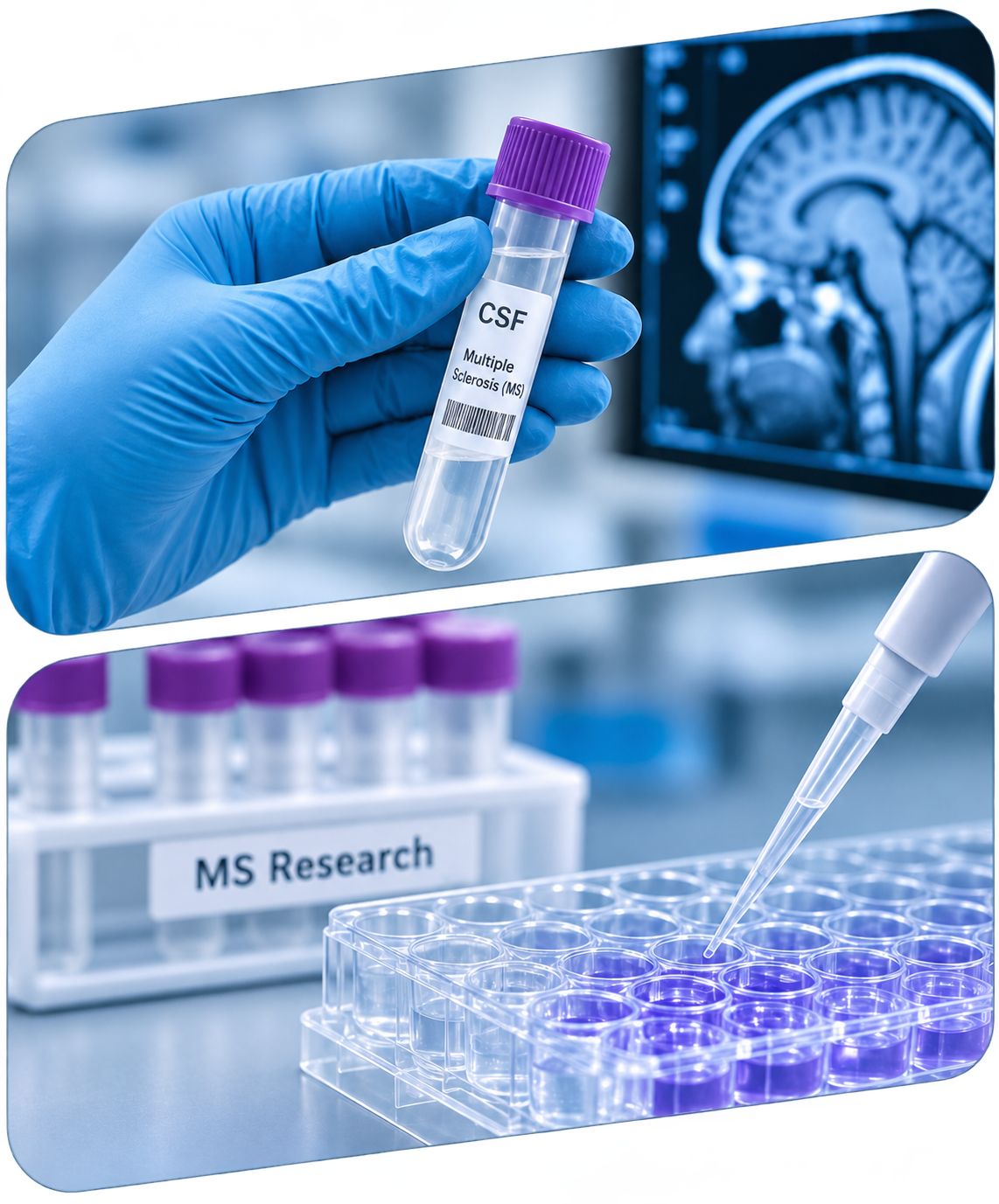
Multiple sclerosis (MS) Samples for Research
Multiple Sclerosis Cerebrospinal Fluid for Research
Multiple sclerosis cerebrospinal fluid is a valuable research material because it provides access to biological components associated with the central nervous system (CNS). As a fluid surrounding the brain and spinal cord, CSF contains proteins, immune-associated molecules, metabolites, and other components that may reflect processes occurring within the CNS.
Multiple sclerosis is a chronic immune-mediated disease characterized by inflammatory demyelination and neuroaxonal injury. Research involving CSF from patients with MS can help scientists investigate immune responses, neurological tissue injury, molecular changes, and potential biomarkers associated with disease activity or progression.
CSF samples from multiple sclerosis patients are particularly relevant to neuroimmunology, neuroinflammation, and translational neuroscience. They can be used to investigate immunoglobulin patterns, neurofilament proteins, myelin-associated molecules, inflammatory mediators, and broader molecular signatures.
Compared with peripheral biological matrices, CSF may provide different information about CNS-associated processes. However, interpretation of CSF findings requires consideration of donor characteristics, disease subtype, treatment history, collection conditions, and analytical methodology.
Cell Bio supports the procurement of multiple sclerosis cerebrospinal fluid samples for research programs requiring clinically relevant human biospecimens. We help research teams define the donor, specimen, and documentation requirements necessary to evaluate appropriate sourcing options.
Available Multiple Sclerosis CSF Samples
Cell Bio supports sourcing inquiries for different categories of multiple sclerosis CSF specimens, including patient-derived samples associated with defined disease subtypes and research requirements.
Specimens may be requested according to MS diagnosis, clinical characteristics, sample volume, preservation format, and available documentation. The availability of individual cohorts and sample characteristics depends on existing sourcing opportunities and the feasibility of project-specific procurement.
Patient-Derived Multiple Sclerosis CSF Samples
Patient-derived multiple sclerosis CSF samples provide biological material collected from individuals diagnosed with MS.
These specimens may support research into immune-mediated mechanisms, neurological injury, disease-associated molecular changes, and candidate biomarkers.
Researchers may require CSF samples from patients meeting particular clinical criteria, such as disease subtype, duration of illness, treatment status, or other relevant characteristics.
Patient-derived CSF can also be useful for comparative studies involving different MS populations or appropriately selected control cohorts.
Cell Bio supports sourcing requests for clinical multiple sclerosis CSF samples and helps researchers define the clinical information needed to characterize the intended study population.
The availability of specific donor criteria and clinical annotations is evaluated individually.
Relapsing-Remitting Multiple Sclerosis CSF Samples
Relapsing-remitting multiple sclerosis (RRMS) CSF samples are relevant to research investigating inflammatory disease activity, immune-associated molecular changes, and biomarkers linked to the relapsing-remitting disease course.
RRMS is characterized by episodes of neurological symptoms followed by periods of partial or complete recovery, although disease activity and progression can vary between individuals.
Researchers may use RRMS CSF samples to investigate neuroinflammatory pathways, immune responses, neuroaxonal injury markers, and differences between clinically defined patient populations.
Some projects require additional information about disease activity, relapse history, treatment exposure, or the timing of specimen collection.
Cell Bio can assess requests for RRMS CSF specimens according to the proposed donor criteria, available documentation, and sourcing feasibility.
Primary Progressive Multiple Sclerosis CSF Samples
Primary progressive multiple sclerosis (PPMS) CSF samples may support research into progressive neurological disability, neurodegeneration-associated molecular changes, and mechanisms contributing to disease progression.
PPMS research often focuses on biological processes that may differ from those observed in relapsing forms of MS, including the relationship between chronic inflammation, neuroaxonal injury, and progressive disease.
Patient-derived PPMS CSF specimens can be relevant to exploratory biomarker studies, molecular profiling, and comparative investigations involving other MS subtypes.
Researchers may request PPMS samples with defined clinical characteristics or accompanying disease-related information.
Cell Bio supports project-specific sourcing inquiries for PPMS CSF samples, subject to donor availability, clinical documentation, and collection feasibility.
Secondary Progressive Multiple Sclerosis CSF Samples
Secondary progressive multiple sclerosis (SPMS) CSF samples can support studies examining biological changes associated with progression following an earlier relapsing-remitting disease course.
Research involving SPMS may investigate neuroaxonal injury, chronic inflammatory mechanisms, molecular signatures, and biomarkers associated with progressive neurological impairment.
Comparative studies involving RRMS, PPMS, and SPMS cohorts may help researchers explore differences in biological pathways and disease-associated molecular patterns.
Cell Bio can evaluate requests for SPMS CSF specimens based on defined clinical and biospecimen specifications.
The availability of samples with particular disease histories, treatment characteristics, or neurological assessments must be confirmed for each project.
Frozen Multiple Sclerosis CSF Samples
Frozen multiple sclerosis CSF samples can support research applications in which appropriately collected and preserved cerebrospinal fluid is suitable for downstream laboratory analysis.
Frozen CSF specimens may be requested for biomarker investigations, protein profiling, molecular studies, and other analytical workflows.
Important sample specifications can include collection-to-processing interval, aliquot volume, storage conditions, preservation history, and previous freeze-thaw exposure.
These factors may influence the suitability of individual specimens for particular assays, especially when investigating analytes sensitive to pre-analytical handling.
Cell Bio helps researchers define requirements for frozen MS CSF samples and evaluate sourcing options according to the intended analytical application.
Matched Multiple Sclerosis CSF & Control Samples
Some research projects require matched multiple sclerosis CSF samples or appropriate control specimens to support comparative analysis.
Matched biospecimens may include cerebrospinal fluid and serum collected from the same donor, enabling researchers to investigate relationships between biological measurements in the CNS-associated and peripheral compartments.
Multiple sclerosis CSF and serum samples may be relevant to studies involving immunoglobulins, inflammatory mediators, proteins, and other candidate biomarkers.
For example, certain immunological investigations require paired CSF and serum measurements to support interpretation of intrathecal immune activity. The suitability of matched specimens depends on the study design, collection timing, and available documentation.
Other projects may require control CSF specimens from individuals without MS, including disease-control populations selected according to specific research criteria.
The definition of an appropriate control cohort is important because CSF collection is an invasive procedure, and control samples should be obtained only within ethically and clinically appropriate collection arrangements.
Cell Bio can assess requests for matched CSF and serum specimens, disease-control cohorts, and clinically characterized comparative samples.
Availability depends on donor eligibility, collection opportunities, matching requirements, and the clinical information needed for the study.
Multiple Sclerosis CSF Procurement & Sourcing
Cell Bio provides multiple sclerosis CSF procurement and sourcing support for organizations conducting biomedical, neurological, and pharmaceutical research.
Research projects involving MS CSF can require highly specific donor populations and specimen characteristics. A study investigating neurofilament light chain may have different requirements from one focused on immunoglobulin patterns, cytokines, or proteomic profiling.
Our procurement process begins with an assessment of the scientific and operational requirements.
Researchers may specify:
- Confirmed multiple sclerosis diagnosis.
- Disease subtype, including RRMS, PPMS, or SPMS.
- Donor age, sex, and relevant demographic characteristics.
- Disease duration or other clinical variables.
- Treatment-related information, where available.
- Required CSF volume and number of specimens.
- Frozen sample and aliquoting requirements.
- Matched serum or other biospecimens.
- Clinical annotation and documentation.
- Intended analytical methods and project timelines.
As a multiple sclerosis CSF supplier, Cell Bio helps researchers identify potential sourcing pathways and evaluate whether requested specifications can be supported through existing specimens or appropriately arranged collection projects.
Custom multiple sclerosis CSF procurement may be particularly valuable when a study requires a narrowly defined patient population or specific associated clinical data.
Our objective is to support access to research biospecimens that are suitable for the proposed study design while maintaining appropriate ethical, quality, and documentation standards.
Custom & Prospective Multiple Sclerosis CSF Collection
Some research programs require custom multiple sclerosis CSF collection because existing biospecimens do not meet the study’s clinical, analytical, or documentation requirements.
Cell Bio supports inquiries for prospective CSF collection involving patients with defined MS characteristics, subject to clinical and ethical feasibility.
A custom collection project may specify the MS subtype, donor eligibility criteria, relevant clinical information, required specimen volume, processing conditions, and associated biospecimens.
Where clinically appropriate, a study may also request matched CSF and serum collection or defined collection time points.
Potential requirements include disease-specific patient recruitment, standardized specimen handling, available clinical assessments, and agreed sample documentation.
Unlike noninvasive biospecimen collection, obtaining cerebrospinal fluid involves lumbar puncture and requires appropriate medical oversight. Prospective CSF collection must therefore be clinically and ethically justified, with suitable donor consent and compliance with applicable requirements.
Cell Bio evaluates prospective multiple sclerosis CSF collection requests in collaboration with relevant sourcing and clinical collection arrangements.
Feasibility depends on the study design, clinical circumstances, donor recruitment opportunities, ethical approvals, and logistical requirements.
Multiple Sclerosis CSF Processing & Quality Control
Appropriate multiple sclerosis CSF processing and quality control are important for maintaining the scientific value of cerebrospinal fluid specimens.
CSF is used in research involving proteins, immunoglobulins, inflammatory mediators, metabolites, and other molecular components. Pre-analytical conditions can influence the measurement and interpretation of these analytes.
Relevant considerations may include specimen collection procedures, collection-to-processing interval, sample identification, centrifugation where appropriate, aliquoting, freezing, storage, and transportation.
The number of freeze-thaw cycles may also be relevant for certain analytical workflows.
For studies involving CSF neurofilament light chain, cytokines, proteomics, or metabolomics, researchers should define the required specimen characteristics in relation to their validated analytical methods.
Cell Bio emphasizes quality management, sample traceability, and documentation during human biospecimen procurement.
Where available, processing and storage information can be reviewed against the research protocol to help assess specimen suitability.
Because different biomarkers and analytical platforms may have different requirements, no single processing approach should be assumed to be appropriate for every CSF research application.
Clinical Data & Multiple Sclerosis Disease Characterization
The scientific value of clinically annotated multiple sclerosis CSF can be enhanced by information describing the donor’s disease characteristics and the circumstances of specimen collection.
MS is a heterogeneous disease, and clinical variables may be important when interpreting molecular findings or comparing study populations.
Depending on the specimen source and available documentation, relevant information may include donor age, sex, MS subtype, disease duration, treatment history, disease activity, and other clinically meaningful characteristics.
Some research programs may also require neurological assessment information, such as Expanded Disability Status Scale (EDSS) scores, or laboratory findings relevant to the study.
Collection date, specimen processing details, and preservation history may provide additional context for analytical interpretation.
Cell Bio supports requests for multiple sclerosis CSF with clinical data and helps researchers define the documentation required for their intended investigations.
The availability and completeness of clinical variables vary between specimen sources. Individual data fields are confirmed during procurement planning and handled in accordance with applicable privacy, consent, and ethical requirements.
Multiple Sclerosis CSF Biomarker Research
CSF biomarkers in multiple sclerosis are investigated to improve understanding of immune-mediated disease mechanisms, neurological tissue injury, and biological changes associated with disease activity or progression.
Cerebrospinal fluid provides opportunities to study immune-associated proteins, immunoglobulins, neuroaxonal injury markers, myelin-related molecules, and inflammatory mediators.
Patient-derived MS CSF specimens can support exploratory biomarker discovery, comparative cohort studies, and the evaluation of candidate molecular markers.
Cell Bio supplies and sources research biospecimens for these applications, with sample suitability assessed according to the proposed analytical methods and available specimen characteristics.
Oligoclonal Bands & Immunoglobulin Research
Multiple sclerosis CSF oligoclonal bands and immunoglobulin-associated measurements are important subjects in MS-related neuroimmunology research.
Oligoclonal bands reflect patterns of immunoglobulin production that may provide information about immune activity within the central nervous system.
Researchers may investigate these patterns to better understand intrathecal immune responses, immunoglobulin-related molecular characteristics, and differences between patient populations.
The CSF IgG index is another immunological measurement used in the evaluation of intrathecal IgG synthesis. Its interpretation requires appropriate CSF and serum measurements.
Studies involving oligoclonal bands, immunoglobulins, or IgG-related markers may therefore require specific specimen characteristics, matched serum samples, or associated laboratory information.
Cell Bio can assess sourcing requests for MS CSF specimens intended for immunoglobulin research.
Availability of samples with known oligoclonal band status, IgG index, or other pre-existing laboratory results must be confirmed individually.
Neurofilament Light Chain Biomarkers
Multiple sclerosis CSF neurofilament light chain (NfL) is widely investigated as a marker associated with neuroaxonal injury.
Research involving CSF NfL may examine relationships between neuroaxonal damage, inflammatory disease activity, clinical characteristics, and disease progression.
NfL studies can also involve comparisons between MS subtypes or evaluations of molecular measurements across defined patient populations.
The interpretation of NfL concentrations requires consideration of factors such as donor age, disease characteristics, collection conditions, and the analytical method used.
Cell Bio supports sourcing inquiries for MS CSF samples intended for neurofilament light chain biomarker research.
Researchers should specify any requirements concerning specimen processing, storage, clinical annotation, or pre-existing NfL measurements when submitting a procurement request.
Myelin Basic Protein Research
Multiple sclerosis CSF myelin basic protein is investigated in research involving myelin-associated processes and demyelinating neurological disease.
Myelin basic protein (MBP) is a structural component of myelin, and its presence or measurement in CSF may be studied in relation to myelin injury and associated biological processes.
Researchers may use appropriately selected MS CSF specimens to investigate MBP-related molecular findings or compare myelin-associated biomarkers between patient cohorts.
The interpretation of MBP measurements depends on the research context, analytical methodology, and relevant clinical characteristics.
Cell Bio can assess requests for CSF specimens intended for myelin-associated biomarker studies, subject to the availability and suitability of the required samples.
Cytokines & Neuroinflammation Biomarkers
Multiple sclerosis CSF cytokines and other inflammatory mediators are investigated to characterize immune-associated processes within the central nervous system.
Neuroinflammation research may involve cytokines, chemokines, immune-related proteins, and molecular patterns associated with inflammatory signaling.
Studies can compare different MS subtypes, investigate relationships between inflammatory markers and clinical characteristics, or explore candidate biomarkers associated with disease mechanisms.
Because inflammatory analytes may be affected by collection and storage conditions, pre-analytical requirements should be defined before specimen procurement.
Cell Bio supports sourcing of MS CSF samples for neuroinflammation biomarker research, with donor selection and specimen specifications tailored to the proposed study.
Multiple Sclerosis CSF for Molecular Analysis
Multiple sclerosis CSF molecular research uses patient-derived cerebrospinal fluid to investigate proteins, metabolites, and other molecular components associated with neurological disease.
Molecular studies may focus on individual candidate biomarkers or broader profiling approaches designed to identify biological patterns across patient populations.
The suitability of CSF for a particular molecular workflow depends on sample volume, collection conditions, preservation, storage history, and the requirements of the analytical platform.
Cell Bio helps research teams define sourcing specifications for CSF-based molecular investigations.
CSF Proteomics
Multiple sclerosis CSF proteomics investigates proteins and peptides present in cerebrospinal fluid to characterize biological pathways and potential disease-associated molecular signatures.
Proteomic research may involve comparisons between MS subtypes, investigation of inflammatory or neurodegenerative processes, and identification of candidate biomarkers.
Patient-derived CSF can provide a clinically relevant matrix for exploratory protein profiling and comparative molecular studies.
However, protein abundance, stability, and analytical detectability may be influenced by specimen handling and processing conditions.
Researchers planning CSF proteomics studies should specify the required sample volume, preservation conditions, and relevant clinical information.
Cell Bio supports procurement inquiries for MS CSF specimens intended for proteomics and protein analysis, subject to sample availability and suitability.
CSF Metabolomics
Multiple sclerosis CSF metabolomics investigates small molecules and metabolic patterns that may be associated with neurological processes or disease-related biological changes.
Metabolomic studies may explore differences between MS patient groups, evaluate candidate metabolic biomarkers, or investigate relationships between molecular profiles and clinical characteristics.
CSF metabolite measurements can be influenced by collection procedures, sample processing, storage conditions, and analytical methodology.
For this reason, consistency in pre-analytical handling can be important when comparing specimens across cohorts.
Cell Bio can help researchers define procurement requirements for MS CSF samples intended for metabolomics research.
CSF Molecular Profiling
Multiple sclerosis CSF molecular profiling may involve the investigation of proteins, metabolites, immune-associated molecules, or other measurable biological components.
Integrated molecular approaches can help researchers explore complex disease-associated patterns and generate hypotheses about neurological and immunological mechanisms.
Comparative studies may involve RRMS, PPMS, SPMS, or appropriately selected control cohorts.
Clinical annotation and standardized specimen characteristics can be particularly valuable when interpreting molecular differences between study groups.
Cell Bio supports sourcing inquiries for MS CSF samples intended for molecular profiling and related translational research applications.
Multiple Sclerosis CSF Research Applications
Human multiple sclerosis CSF biospecimens can support research programs investigating disease mechanisms, candidate biomarkers, and biological changes associated with MS.
The selection of appropriate donor cohorts and specimen characteristics is important for obtaining interpretable results.
Neuroimmunology Research
Multiple sclerosis CSF neuroimmunology research investigates immune-associated processes involving the central nervous system.
Patient-derived CSF can support studies of immunoglobulins, cytokines, inflammatory mediators, and other molecular components relevant to immune-mediated neurological disease.
Clinically characterized specimens may help researchers compare immune-associated patterns across MS subtypes and study populations.
Biomarker Discovery
Multiple sclerosis CSF biomarker discovery involves the investigation of molecules that may be associated with disease activity, neurological injury, progression, or other biological processes.
Research may focus on candidate protein markers, inflammatory mediators, neurofilament proteins, or broader molecular signatures.
CSF samples from defined patient cohorts can support exploratory biomarker investigations and the evaluation of research hypotheses.
Disease Progression Research
CSF specimens from patients with different MS subtypes may support research into biological processes associated with disease progression.
Comparative investigations involving RRMS, PPMS, and SPMS can explore molecular differences related to inflammatory activity, neuroaxonal injury, and progressive neurological changes.
Relevant clinical information is particularly important when interpreting findings across heterogeneous patient populations.
Clinical Research
Multiple sclerosis CSF clinical research may involve clinically annotated specimens collected from patients meeting defined diagnostic or disease-related criteria.
Researchers may use these samples to investigate relationships between molecular findings and clinical characteristics, compare disease cohorts, or evaluate candidate biomarkers.
Study-specific donor selection and documentation requirements should be established during procurement planning.
Drug Discovery
Multiple sclerosis CSF drug discovery research may use patient-derived biospecimens to investigate disease-associated molecular pathways, develop research assays, and explore potential pharmacodynamic or treatment-related biomarkers.
The use of clinically relevant human specimens can help researchers evaluate biological measurements in the context of MS.
The suitability of particular CSF samples depends on the research objectives and analytical requirements.
Translational Research
Multiple sclerosis CSF translational research helps connect laboratory investigations with biological material obtained from patients.
Patient-derived CSF can be used to examine whether molecular findings identified during exploratory research are detectable in clinically characterized populations.
Such studies may support biomarker development, comparative disease research, and investigations into mechanisms relevant to therapeutic research.
Preclinical Research
Human MS CSF samples may support preclinical research activities involving assay development, analytical method evaluation, and exploratory biomarker investigations.
The appropriate specimens depend on the research workflow, intended measurements, and required donor characteristics.
Pharmaceutical Research
Multiple sclerosis CSF pharmaceutical research may require disease-specific patient cohorts, matched biospecimens, or samples with defined clinical annotations.
These specimens can support biomarker-oriented research, translational investigations, and scientific programs associated with pharmaceutical development.
Cell Bio supports procurement planning for such projects through disease-specific human biospecimen sourcing.
Why Choose Cell Bio as Your Multiple Sclerosis CSF Supplier?
Selecting a reliable multiple sclerosis CSF sample supplier is an important consideration for research programs that depend on clinically relevant human biological material.
Cell Bio supports biomedical and pharmaceutical organizations through human biospecimen sourcing, project-specific procurement, and collaboration with clinical collection partners.
Our approach combines attention to scientific requirements, ethical procurement, quality management, clinical characterization, and specimen traceability.
Human Biospecimen Expertise
Cell Bio works with human biological specimens for research applications across multiple disease areas.
Our team helps researchers translate scientific objectives into practical procurement specifications, including donor criteria, sample format, volume, clinical data, and processing requirements.
Disease-Specific CSF Procurement
Multiple sclerosis research often requires specimens from clinically defined patient populations.
Cell Bio supports disease-specific CSF sourcing inquiries involving MS diagnosis, disease subtype, donor characteristics, and study-specific requirements.
The feasibility of obtaining particular cohorts is evaluated individually.
Quality Management
Cell Bio operates under an ISO 9001:2015-certified quality management system, supporting structured processes and quality-focused approaches to biospecimen procurement.
Sample documentation and handling requirements are considered in relation to the research project’s specifications.
Ethical Biospecimen Procurement
Ethical sourcing is essential when working with human cerebrospinal fluid.
Cell Bio emphasizes appropriate informed consent, applicable ethical requirements, and responsible handling of donor-related information.
Because CSF collection is invasive, prospective procurement requests require particular attention to clinical justification and ethical oversight.
Clinical Collection Network
Through clinical collection relationships, Cell Bio supports sourcing inquiries involving disease-specific human biospecimens.
Access to particular patient populations and collection arrangements depends on clinical feasibility, donor eligibility, and applicable requirements.
Custom CSF Collection
Research projects may require CSF specimens that meet narrowly defined clinical or analytical criteria.
Cell Bio supports custom procurement and prospective collection inquiries, helping researchers evaluate whether the requested study design can be implemented through appropriate clinical arrangements.
Clinical Annotation & Traceability
Clinical information and specimen traceability can be important for interpreting research findings.
Cell Bio helps research teams define the donor characteristics, collection information, and documentation required for their projects.
The availability of individual clinical variables is confirmed according to the specimen source and procurement scope.
Scientific & Project Support
Cell Bio works with researchers to clarify biospecimen specifications, assess sourcing feasibility, and coordinate procurement planning.
Whether a project requires a small exploratory cohort or a more complex disease-specific collection, our team can help identify the information needed to evaluate appropriate sourcing options.
Frequently Asked Questions
What are multiple sclerosis CSF samples?
Multiple sclerosis CSF samples are cerebrospinal fluid specimens collected from patients diagnosed with multiple sclerosis. They are used in biomedical research to investigate immune-associated processes, neurological injury, molecular biomarkers, and disease-related biological changes.
What are multiple sclerosis CSF samples used for in research?
MS CSF samples can support neuroimmunology, biomarker discovery, proteomics, metabolomics, molecular profiling, and translational research. Researchers may investigate immunoglobulins, neurofilament light chain, myelin-associated proteins, cytokines, and other molecular components.
Does Cell Bio supply human multiple sclerosis CSF samples?
Cell Bio supports the sourcing and procurement of human multiple sclerosis CSF samples for research. Availability depends on the requested patient population, specimen characteristics, clinical documentation, and sourcing feasibility.
What types of multiple sclerosis CSF samples can be requested?
Researchers may request patient-derived MS CSF specimens, samples associated with particular MS subtypes, frozen CSF, clinically annotated specimens, or matched biospecimens. Individual requirements are evaluated according to available sourcing opportunities.
Are RRMS CSF samples available?
Cell Bio can assess sourcing requests for relapsing-remitting multiple sclerosis CSF samples. Availability depends on donor criteria, specimen requirements, clinical documentation, and existing or prospective collection opportunities.
Can I request PPMS or SPMS CSF samples?
Yes, researchers can submit procurement inquiries for primary progressive or secondary progressive multiple sclerosis CSF samples. The feasibility of sourcing particular progressive MS cohorts is evaluated individually.
Are frozen multiple sclerosis CSF samples available?
Cell Bio supports sourcing inquiries for frozen MS CSF specimens. Researchers should specify required volumes, storage-related criteria, processing requirements, and intended analytical applications. Availability is confirmed for each project.
Can I request matched CSF and serum samples from MS patients?
Cell Bio can assess requests for matched CSF and serum specimens from patients with multiple sclerosis. Matching requirements, collection timing, and available clinical information should be specified when submitting an inquiry.
Are control CSF samples available for multiple sclerosis research?
Requests for appropriate non-MS control CSF specimens may be considered according to the study design and sourcing feasibility. Control cohorts must be defined carefully, and specimen collection must comply with applicable clinical and ethical requirements.
Does Cell Bio provide clinically annotated MS CSF samples?
Cell Bio supports sourcing inquiries for MS CSF specimens with associated clinical information. Depending on availability, documentation may include disease subtype, donor demographics, treatment-related information, or other study-relevant variables. Individual data fields must be confirmed.
Can MS CSF samples be used for oligoclonal band research?
Appropriately collected MS CSF samples may support research involving oligoclonal bands, immunoglobulins, and intrathecal immune responses. Studies requiring known OCB status or matched serum measurements should specify these requirements during procurement.
Can multiple sclerosis CSF samples be used for neurofilament light chain research?
Yes. CSF from patients with MS can support neurofilament light chain biomarker research when specimen characteristics are appropriate for the intended assay. Collection, processing, storage, and clinical context should be considered.
Can MS CSF samples be used for proteomics and metabolomics?
MS CSF specimens can support proteomics and metabolomics research when their collection and preservation conditions are suitable for the proposed analytical methods. Researchers should define the required specimen characteristics before procurement.
Does Cell Bio offer custom multiple sclerosis CSF procurement?
Cell Bio supports custom MS CSF procurement inquiries involving specific disease subtypes, donor criteria, sample requirements, and clinical documentation. Each request is evaluated according to sourcing opportunities and project feasibility.
Can multiple sclerosis CSF samples be collected prospectively?
Prospective MS CSF collection may be considered when clinically and ethically appropriate. Because CSF collection requires an invasive procedure, projects must meet applicable clinical, consent, ethical, and operational requirements.
Where can researchers buy multiple sclerosis CSF samples?
Researchers looking to buy multiple sclerosis CSF samples for research can contact Cell Bio with their project specifications. Our team can evaluate sourcing options for patient-derived MS CSF specimens, defined disease cohorts, matched samples, and custom procurement requests.
Request Multiple Sclerosis CSF Samples
Cell Bio supports researchers seeking human multiple sclerosis CSF samples for research, including patient-derived cerebrospinal fluid specimens, disease-specific cohorts, frozen samples, and custom procurement projects.
Whether your study focuses on neuroimmunology, CSF biomarkers, neurofilament light chain, proteomics, molecular profiling, drug discovery, or translational neuroscience, our team can help evaluate sourcing options based on your scientific requirements.
To request MS CSF samples, please provide the preferred disease subtype, donor characteristics, required sample volume, number of specimens, relevant clinical data, matched biospecimen requirements, intended analytical application, and project timeline.
Our team will review your specifications and discuss potential procurement options, including prospective collection where clinically and ethically feasible.
Request Multiple Sclerosis CSF Samples
Request a Quote
Discuss Custom MS CSF Procurement
Contact Cell Bio