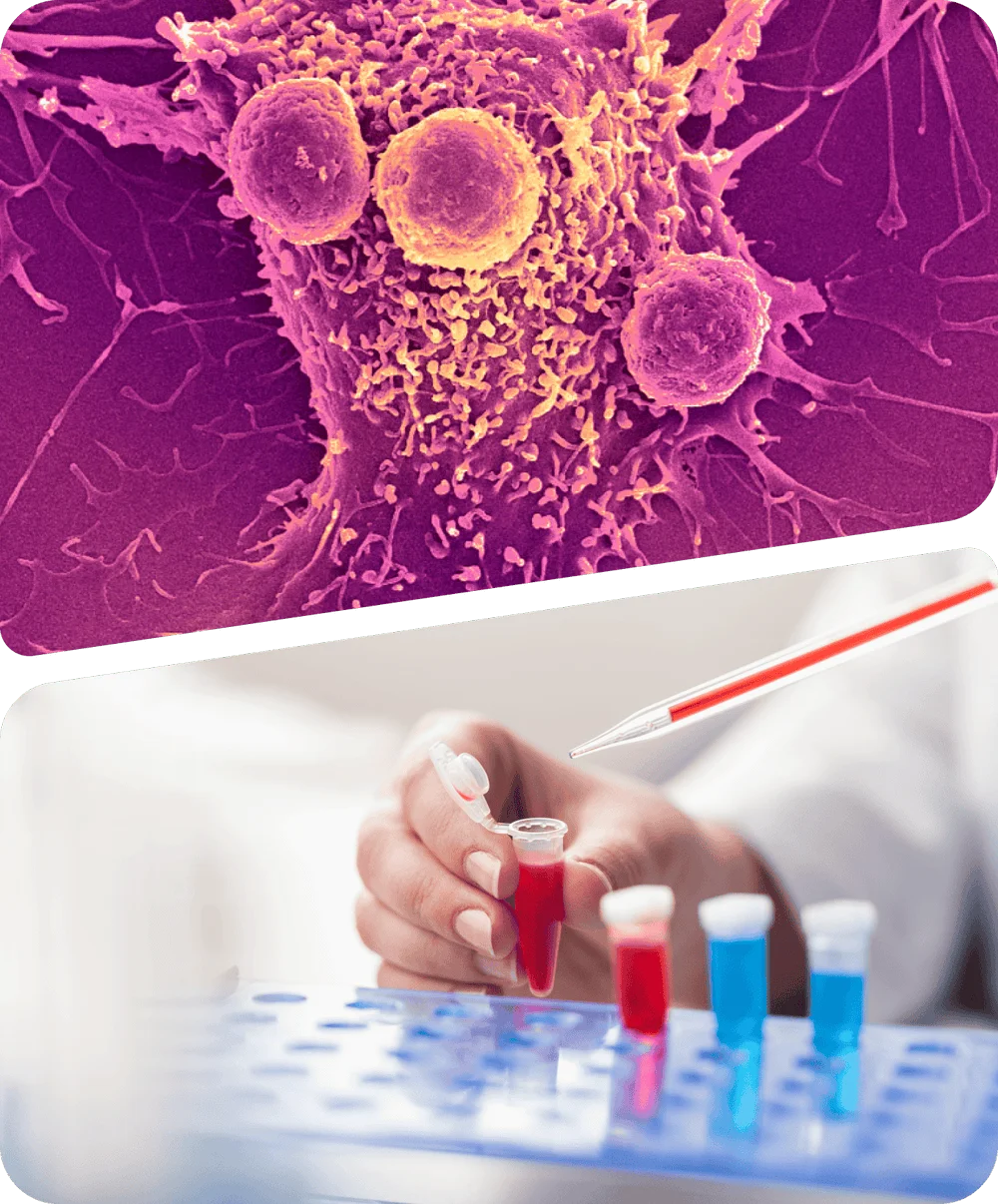


Lebensfähige dissoziierte Tumorzellen (DTCs) sind Einzelzellsuspensionen aus Tumoren, die Tumorzellen, Stromazellen und wichtige tumorinfiltrierende Lymphozyten (TILs) enthalten. Sie werden durch enzymatische/mechanische Zersetzung von festem Gewebe gewonnen und stellen ein repräsentatives Modell für die Forschung sowie eine Quelle für Therapien wie die TIL-Therapie dar. Bei der TIL-Therapie werden Immunzellen (T-Zellen, NK-Zellen) extrahiert und vermehrt, um Krebs zu bekämpfen. TILs, insbesondere T-Zellen (CD8+, CD4+), spielen eine Schlüsselrolle in der Antitumorimmunität. Die Analyse ihrer Präsenz und Funktion in DTCs trägt zur Vorhersage des Erfolgs von Immuntherapien bei.
Lebensfähige dissoziierte Tumorzellen (DTCs)
Was sie sind:
Eine Mischung aller Zelltypen, die in einem soliden Tumor vorkommen (Krebszellen, Immunzellen wie TILs, Fibroblasten usw.), jeweils als Einzelzellen.
Wie sie hergestellt werden:
Solide Tumoren werden zerkleinert und mit Enzymen und mechanischer Kraft behandelt, um sie aufzubrechen.
Warum sie nützlich sind:
Sie ahmen die komplexe Umgebung des ursprünglichen Tumors (Tumormikroumgebung – TME) nach und sind entscheidend für die Untersuchung von Zellinteraktionen, die Erprobung von Medikamenten und die Isolierung spezifischer Immunzellen.
Tumor-infiltrierende Lymphozyten (TILs)
Was sie sind:
Immunzellen (hauptsächlich T-Zellen, B-Zellen und NK-Zellen), die aus dem Blutkreislauf in den Tumor eingewandert sind.
Ihre Rolle:
Sie sind der Versuch des Körpers, Krebs zu bekämpfen; ihre Anwesenheit deutet oft auf eine bessere Prognose und ein besseres Ansprechen auf die Behandlung hin.
Therapeutisches Potenzial:
Bei der TIL-Therapie werden TILs aus dem Tumor eines Patienten entnommen, im Labor in großer Zahl vermehrt und anschließend wieder infundiert, um die Immunabwehr gegen den Krebs zu verstärken.
Die Verbindung
- DTCs sind die Quelle für TILs (tumorinfiltrierende Lymphozyten) für Forschung und Therapie. Durch die Dissoziation von Tumoren in DTCs können
- Forscher spezifische TIL-Subpopulationen (z. B. CD8+ T-Zellen) für detaillierte Analysen (Immunphänotypisierung) oder für adoptive Zelltherapien isolieren.
Für weitere Informationen kontaktieren Sie unser Team unter bd@cell-bio.life.